My Research.
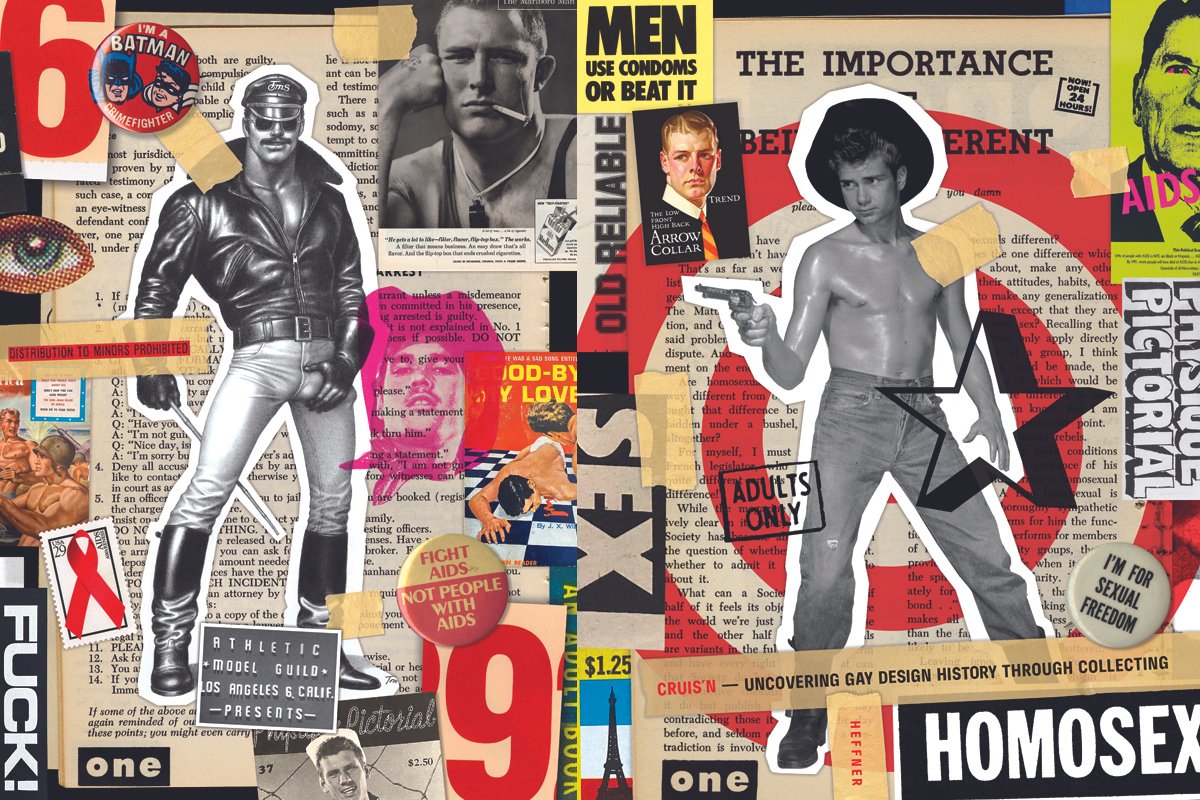
My research centers on LGBTQ+ graphic design history, archival practice, and vernacular print culture, with a focus on how graphic design has shaped and communicated concepts of identity, desire, community, resistance, and belonging.
While traditional design histories frequently emphasize dominant movements, celebrated practitioners, and established forms of professional practice, I intentionally look beyond the conventional canon to recover designers, illustrators, photographers, artifacts, and visual narratives that have been overlooked, marginalized, censored, or erased.
Employing a methodology I define as Archive-Based Design Research (ABDR), I utilize everyday printed artifacts—including magazines, pulp paperbacks, advertisements, posters, flyers, photographs, buttons, and other ephemera—as primary sources for historical and visual analysis. I analyze not only the messages these objects convey, but also the mechanisms of communication, such as typography, imagery, illustration, photography, production methods, visual codes, and modes of circulation. I am particularly interested in how queer visual culture evolved during periods of censorship and social repression, when designers and image-makers used both subtle and explicit visual languages to express sexuality, desire, identity, and belonging.
Central to this research is Lost + Found, my evolving dynamic archive of vernacular printed material. This archive serves as both a repository and a research laboratory, enabling me to collect, preserve, document, interpret, and contextualize ephemeral objects that are often missing from institutional collections and conventional histories of graphic design. Through these materials, I examine how queer communities developed their own visual cultures and influenced broader representations of masculinity, gender, sexuality, beauty, and social identity.
My research extends beyond the archive to include writing, publications, exhibitions, lectures, and digital scholarship. Current projects explore queer archetypes and coded visual languages, physique and lifestyle magazines, nightlife ephemera, homoerotic illustration and photography, protest graphics, and LGBTQ+ activism. Collectively, these projects examine the contributions of designers, illustrators, photographers, publishers, activists, and often-anonymous creators whose work circulated outside mainstream design culture.
Ultimately, my research seeks to broaden the history of graphic design by demonstrating that vernacular and ephemeral materials are not peripheral to design history but constitute essential evidence. By recovering overlooked objects and the individuals and communities that produced them, my work positions collecting, preservation, visual analysis, and archival interpretation as active forms of design scholarship. This approach contributes to a more comprehensive understanding of how graphic design both reflects and shapes culture.